La conformité comme propriété technique — pas un exercice documentaire
Dans les environnements réglementés, la conformité ne consiste pas à produire des documents.
Il s’agit de démontrer le contrôle.
Les régulateurs, auditeurs et autorités de supervision attendent des organisations qu’elles prouvent :
- Que les contrôles sont appliqués
- Que les responsabilités sont clairement séparées
- Que les changements sont traçables
- Que les preuves sont conservées
- Que les risques sont gérés en continu
La conformité moderne doit être intégrée directement dans :
- Les pipelines CI/CD
- Les processus SDLC sécurisés
- Les environnements cloud et d’exécution
La conformité doit être générée par conception — pas reconstruite après coup.
Nouveau dans ces concepts ? Consultez notre Glossaire pour des définitions en langage clair, ou commencez par le Guide de l’auditeur.
Ce que signifie réellement la « conformité »
Dans les environnements réglementés, la conformité opère sur trois couches complémentaires.
1. Réglementations — ce qui doit être atteint
Obligations juridiquement contraignantes, imposées par les régulateurs.
Exemples
Elles définissent :
- Les attentes en matière de résilience opérationnelle
- Les exigences de gestion des risques liés aux TIC
- La gouvernance de la chaîne d’approvisionnement
- Les obligations de notification des incidents
Tout manquement peut entraîner des mesures de supervision ou des sanctions financières.
2. Normes — comment les contrôles peuvent être mis en œuvre
Des cadres de contrôle structurés qui fournissent des orientations de mise en œuvre.
Exemples
Elles décrivent :
- Les objectifs de contrôle
- La gouvernance des processus
- Les pratiques de gestion de la sécurité
- Les attentes en matière de preuves
3. Cadres d’audit et d’assurance — validation indépendante
Des cadres qui fournissent une assurance externe au moyen d’audits.
Exemple
Ils produisent :
- Des rapports d’audit indépendants
- L’assurance donnée aux clients
- La validation de la gouvernance
Les audits ne créent pas la conformité.
Ils la vérifient.
Le dénominateur commun : les preuves techniques
Quel que soit le cadre, ce sont les mêmes preuves techniques qui sont réutilisées :
- Les journaux des pipelines CI/CD
- Les approbations de changement
- Les revues de pull requests
- Les SBOM et la provenance des artefacts
- Security test results (SAST, DAST, SCA)
- L’historique des déploiements
- La surveillance et les chronologies d’incidents
Ces preuves doivent être :
- Générées en continu
- Corrélées entre les systèmes
- Inaltérables
- Conservées avec une gouvernance des accès
Sans preuves fiables, la conformité ne peut être démontrée.
La conformité tout au long du cycle de livraison logicielle
Dans les environnements réglementés, chaque changement doit pouvoir être justifié.
La conformité couvre donc l’ensemble du cycle de vie :
- Les décisions de conception
- Les commits de code
- L’exécution des pipelines
- Les approbations de mise en production
- L’exécution en production
- La réponse aux incidents
Un SDLC conforme crée une chaîne vérifiable :
Gouvernance → Livraison → Exécution → Conservation
Où :
- La gouvernance définit les responsabilités et les politiques
- La livraison applique les contrôles
- L’exécution génère des preuves opérationnelles
- La conservation préserve l’auditabilité
Contrôles de gouvernance
La conformité commence par la gouvernance :
- Gestion des identités et des accès
- Séparation des tâches
- Politiques de gestion des changements
- Procédures de traitement des exceptions
- Gestion des risques fournisseurs
La gouvernance définit les règles.
L’architecture les applique.
Preuves de livraison (CI/CD)
Les pipelines CI/CD doivent produire :
- La traçabilité des demandes de changement
- Les approbations de pull requests
- Les résultats des tests de sécurité automatisés
- Les décisions des points de contrôle de politique
- Les artefacts de version signés
Dans les environnements réglementés, les pipelines fonctionnent comme des systèmes de contrôle — et pas seulement comme des outils d’automatisation.
Preuves d’exécution et conservation
Les environnements de production doivent fournir :
- Une journalisation centralisée
- Une surveillance de sécurité
- Un suivi des incidents
- La conservation et la gouvernance des accès
Les preuves doivent rester accessibles pour l’audit — parfois des années après le déploiement.
Chaque changement est traçable.
Chaque contrôle produit une preuve.
Les preuves sont conservées et accessibles pour l’audit.
La conformité dans les environnements d’entreprise réglementés
Les secteurs réglementés — banque, assurance, santé, infrastructures critiques — sont soumis à de multiples obligations qui se chevauchent, notamment :
Réglementations
Normes
Cadres d’audit
- SOC 2
Ces cadres diffèrent par leur portée, mais partagent une exigence :
👉 Un contrôle démontrable et continu.
La conformité ne peut reposer sur les seuls audits périodiques.
Elle doit être intégrée aux opérations quotidiennes.
Les contrôles de conformité par catégorie
Une conformité efficace repose sur un ensemble équilibré de contrôles :
Préventifs
- Contrôle d’accès
- Application des politiques
- Paramètres sécurisés par défaut
- Séparation des tâches
Détectifs
- Journalisation
- Surveillance
- Tests de sécurité en continu
Correctifs
- La réponse aux incidents
- Mécanismes de retour arrière
- Suivi des remédiations
Une organisation mature équilibre ces trois catégories.
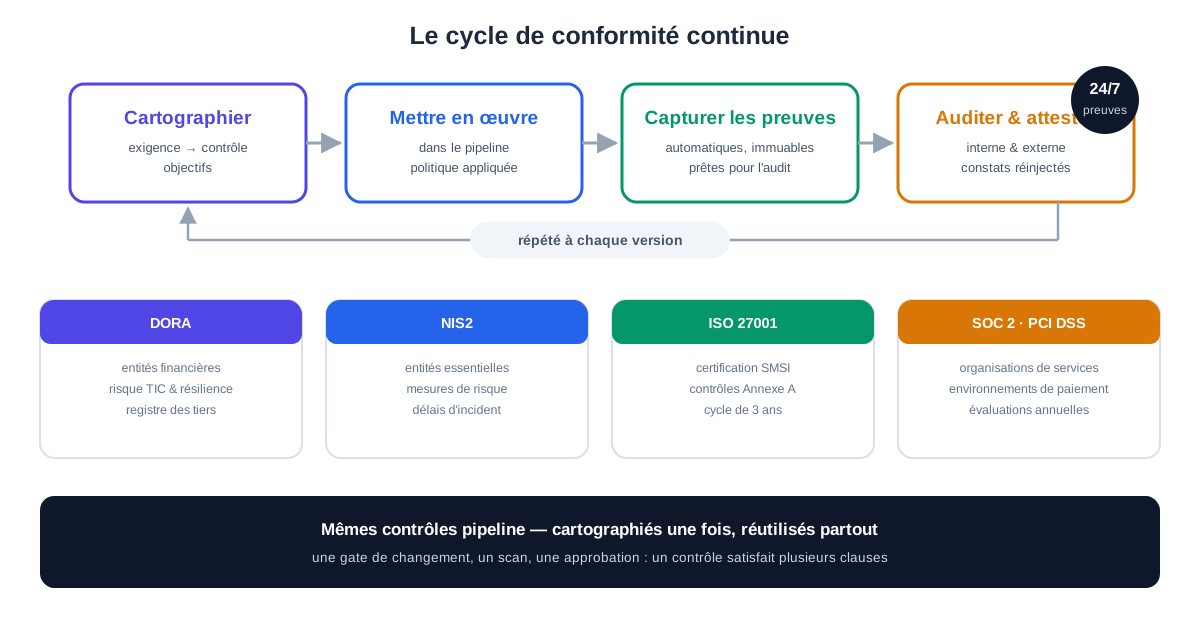
Conformité continue
Dans les environnements réglementés modernes :
La conformité n’est pas un événement annuel.
Elle est continue.
Les pipelines CI/CD la rendent possible en :
- Automatisant l’application des politiques
- Bloquant les changements non conformes
- Générant des journaux prêts pour l’audit
- Préservant la traçabilité dès la conception
Lorsque l’architecture applique le contrôle, la conformité devient une propriété du système. Voir Conformité continue via CI/CD et Audit continu vs audits ponctuels.
Analyses réglementaires approfondies
Ce site couvre en profondeur cinq cadres réglementaires et d’assurance. Chaque page de référence propose des orientations propres à la réglementation, des cartographies de contrôles, des listes de vérification pour auditeurs et des références de preuves.
| Cadre | Type | Périmètre | Page de référence |
|---|---|---|---|
| DORA | Réglementation | Entités financières de l’UE — risques TIC, gouvernance des tiers, tests de résilience | Référence DORA |
| NIS2 | Réglementation | Entités essentielles et importantes — chaîne d’approvisionnement, notification des incidents, gestion des risques | Référence NIS2 |
| ISO 27001 | Norme | Toute organisation — SMSI, contrôles de l’annexe A, certification | Référence ISO 27001 |
| SOC 2 | Assurance | Organismes de services — critères des services de confiance (Trust Service Criteria), rapports de type I/II | Référence SOC 2 |
| PCI DSS | Norme | Environnements de données des titulaires de carte — développement sécurisé, accès, journalisation | Référence PCI DSS |
DORA
- Architecture de conformité DORA — le CI/CD comme système TIC réglementé
- DORA article 21, analyse approfondie — contrôles des risques TIC
- DORA article 28 — risques TIC liés aux tiers
- DORA article 28 — liste de vérification pour l’auditeur
NIS2
- L’architecture de sécurité NIS2 expliquée
- NIS2 article 21 — cartographie des contrôles CI/CD
- Sécurité de la chaîne d’approvisionnement NIS2 — auditer les composants tiers
- Liste de vérification d’audit NIS2 — dossier de preuves
ISO 27001
- Contrôles de l’annexe A d’ISO 27001 cartographiés sur les pipelines CI/CD
- ISO 27001 A.14, analyse approfondie — développement et maintenance des systèmes
- Certification ISO 27001 — exigences de preuves CI/CD
SOC 2
- Critères des services de confiance SOC 2 cartographiés sur les contrôles de pipeline
- SOC 2 type II — exigences de preuves CI/CD dans la durée
- Évaluation de préparation SOC 2 — liste de vérification propre au CI/CD
PCI DSS
- PCI DSS v4.0 — analyse approfondie de l’exigence 6
- PCI DSS et CI/CD — ce que les QSA doivent vérifier
Comparaisons inter-réglementations
- ISO 27001 vs DORA vs NIS2 — matrice de recouvrement des contrôles
- NIS2 vs DORA — analyse du recouvrement pour les entités doublement réglementées
- L’architecture de double conformité expliquée
Audit et preuves
- Briefing d’audit pour dirigeants
- Comment les auditeurs examinent réellement les pipelines CI/CD
- Guide pratique du jour de l’audit
- Construire un référentiel de preuves pour la conformité continue
- Audit continu vs audits ponctuels
- Constats d’audit fréquents — les 10 principales défaillances CI/CD
Domaines de sécurité connexes
La conformité n’existe pas de manière isolée.
Elle dépend de :
- Architecture — modèles d’application et conception des systèmes
- Sécurité CI/CD — les pipelines comme systèmes réglementés
- DevSecOps — des méthodes de travail sécurisées
- Sécurité applicative — conception sécurisée et protection à l’exécution
Ensemble, ces domaines créent une résilience continue et auditable.
Principe final
Dans les environnements réglementés, la conformité ne consiste pas à produire des rapports. Elle consiste à exercer un contrôle.
Si vos systèmes appliquent les politiques, génèrent la traçabilité et conservent les preuves dès la conception, les audits deviennent de simples exercices de vérification. Si les contrôles sont informels ou manuels, la conformité se transforme en reconstruction.
Ressources connexes pour les auditeurs
- Glossaire — définitions en langage clair des termes techniques
- Commencez ici — guide de l’auditeur pour la sécurité CI/CD
- Répertoire complet des ressources — listes de vérification, dossiers de preuves, cartographies de contrôles
- Architecture — comment le CI/CD applique les contrôles dès la conception


