Gouverner et auditer le CI/CD dans les environnements réglementés
Dans les environnements réglementés, les pipelines CI/CD ne sont pas seulement des mécanismes de livraison.
Ce sont des systèmes de contrôle soumis à audit.
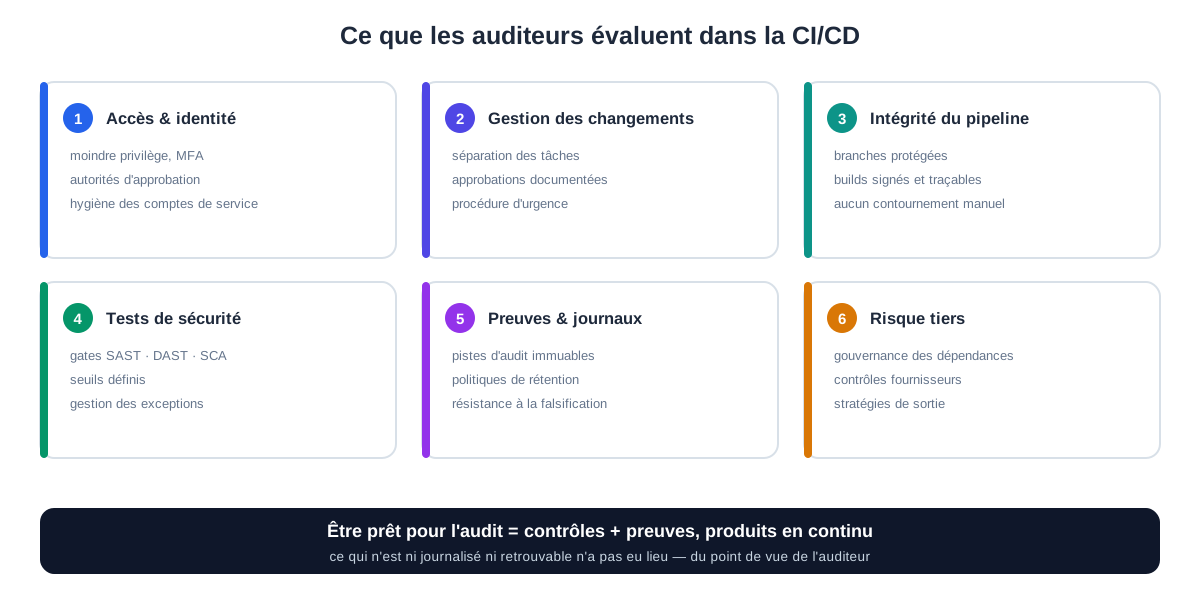
L’audit et la gouvernance déterminent si :
- Les contrôles sont effectivement appliqués
- Les responsabilités sont clairement séparées
- Les preuves sont fiables et complètes
- Les exceptions sont documentées et justifiées
- Les risques liés aux tiers sont gérés
Cette section porte sur la manière dont les auditeurs évaluent les systèmes CI/CD — et sur la façon dont les structures de gouvernance soutiennent la résilience réglementaire.
Nouveau dans l’audit CI/CD ? Commencez par notre Guide de l’auditeur et notre Glossaire pour des définitions en langage clair des termes techniques.
Gouvernance vs audit — comprendre la différence
Bien qu’ils soient souvent employés indifféremment, la gouvernance et l’audit remplissent des rôles distincts.
Gouvernance
La gouvernance définit :
- Qui est responsable des contrôles
- Quelles politiques sont obligatoires
- Comment les changements sont approuvés
- Comment les risques sont évalués
- Comment les exceptions sont gérées
La gouvernance est structurelle.
Audit
L’audit vérifie :
- Si les contrôles fonctionnent réellement
- Si l’application est cohérente
- Si les preuves sont fiables
- Si les attentes réglementaires sont respectées
L’audit est la validation.
Dans les organisations matures, la gouvernance conçoit le modèle de contrôle.
L’audit valide son efficacité.
Ce que les auditeurs évaluent réellement en CI/CD
Les auditeurs se concentrent rarement uniquement sur les outils.
Ils évaluent la maturité des contrôles.
Les domaines d’évaluation principaux comprennent :
1. Accès et séparation des fonctions
Les auditeurs vérifient :
- Contrôle d’accès basé sur les rôles (RBAC)
- Séparation entre l’accès développement et production
- Protection des rôles privilégiés
- Application de l’authentification multifacteur
- Mécanismes de contournement contrôlés
Si les développeurs peuvent déployer directement en production sans contrôles de gouvernance, c’est un constat.
2. Gestion des changements et contrôles d’approbation
Les auditeurs attendent :
- Revues de pull request obligatoires
- Approbations de changements documentées
- Workflows de release contrôlés
- Preuves de journaux d’approbation
- Aucun correctif à chaud non documenté
L’approbation doit être imposée par le système — et non relever d’une pratique informelle.
3. Application des contrôles de sécurité
Ils examinent :
- Si les résultats SAST / DAST bloquent les mises en production
- Comment les points de contrôle de politique sont configurés
- Si les vulnérabilités font l’objet d’une acceptation formelle du risque
- Si les exclusions sont documentées
Des contrôles de sécurité purement consultatifs sont faibles du point de vue de l’audit.
4. Intégrité des preuves
Les preuves doivent être :
- Générées par le système
- Inaltérables
- Horodatées
- Conservées conformément à la politique
Les captures d’écran manuelles ne suffisent pas.
Les preuves fiables comprennent :
- Les journaux CI/CD
- L’historique des déploiements
- Les enregistrements de signature d’artefacts
- Les résultats des analyses de sécurité
- Les enregistrements d’approbation
5. Gouvernance des tiers (focus DORA / NIS2)
Les auditeurs examinent de plus en plus :
- La gouvernance des fournisseurs SaaS de CI/CD
- Les stratégies de sortie
- Les risques liés aux runners partagés
- La transparence sur les sous-traitants ultérieurs
- Les droits d’audit contractuels
Les outils CI/CD tiers font partie du périmètre TIC réglementé. Voir DORA article 28 — risques TIC liés aux tiers et Sécurité de la chaîne d’approvisionnement NIS2 pour des analyses réglementaires approfondies.
Modèle de gouvernance pour un CI/CD réglementé
Une gouvernance solide exige :
Rôles définis
- Architecte sécurité
- Responsable DevOps
- Responsable conformité
- Propriétaire du risque
- Propriétaire de la plateforme CI/CD
Politiques documentées
- Politique de SDLC sécurisé
- Politique de gestion des changements
- Politique de gestion des accès
- Politique de traitement des exceptions
- Politique de gestion des risques liés aux tiers
Traitement formel des exceptions
Les exceptions doivent :
- Faire l’objet d’une évaluation des risques
- Avoir des dates d’expiration
- Être approuvées
- Être traçables
Des exceptions non maîtrisées créent un risque d’audit systémique.
Niveaux de maturité d’audit
Les organisations se situent généralement à l’un des quatre stades de maturité d’audit :
| Niveau | Nom | Caractéristiques | Préparation à l’audit |
|---|---|---|---|
| 1 | Informel | Des pratiques de sécurité existent mais ne sont pas imposées. Aucune preuve systématique. | Non prêt pour l’audit. Constats majeurs à prévoir. |
| 2 | Basé sur les outils | Outils de sécurité intégrés mais appliqués de façon inégale. Résultats consultatifs. | Partielle. Des preuves existent mais l’application présente des lacunes. |
| 3 | Imposé | Les politiques bloquent les changements non conformes. Séparation des tâches en place. Preuves systématiques. | Prêt pour l’audit. Répond aux minimums DORA/NIS2/ISO 27001. |
| 4 | Gouverné et auditable | Preuves continues. Politique en tant que code. Risque prédictif. Traçabilité complète. | Dépasse les exigences. Assurance continue. |
Les environnements réglementés devraient opérer au niveau 3 ou 4. Pour une auto-évaluation structurée, voir le cadre d’évaluation de la maturité DevSecOps.
Signaux d’alerte fréquents en audit
Les problèmes suivants déclenchent fréquemment des constats :
- Comptes administratifs CI/CD partagés
- Absence de points d’approbation imposés
- Accès direct à la production
- Absence de conservation des journaux de pipeline
- Exclusions de vulnérabilités non suivies
- Absence de stratégie de sortie documentée pour les tiers
Ce sont des faiblesses systémiques, et non des problèmes isolés. Pour une analyse complète, voir Constats d’audit fréquents — les 10 principales défaillances CI/CD.
Comment la gouvernance soutient la conformité continue
La gouvernance permet :
- Génération de preuves continue
- Le suivi des décisions fondées sur les risques
- Une responsabilité claire
- La planification de la résilience
- La cartographie des cadres entre DORA, NIS2, ISO 27001, SOC 2, PCI DSS
Sans gouvernance, la conformité devient réactive.
Avec la gouvernance, la conformité devient structurelle.
Analyses approfondies : audit et preuves
Préparation à l’audit
- Briefing d’audit pour dirigeants — les pipelines CI/CD dans les environnements réglementés
- Comment les auditeurs examinent réellement les pipelines CI/CD
- Guide pratique du jour de l’audit
- Avant l’arrivée de l’auditeur — liste de vérification de préparation CI/CD
- Aide-mémoire questions-réponses du jour de l’audit
Listes de vérification par cadre
- DORA article 21 — liste de vérification pour l’auditeur
- DORA article 28 — liste de vérification pour l’auditeur
- Liste de vérification d’audit NIS2 — dossier de preuves
- Liste de vérification NIS2 pour la chaîne d’approvisionnement
- Évaluation de préparation SOC 2 — liste de vérification CI/CD
Preuves et conformité continue
- Construire un référentiel de preuves pour la conformité continue
- Audit continu vs audits ponctuels
- Constats d’audit fréquents — les 10 principales défaillances CI/CD
- Conformité continue via CI/CD
Cadres de gouvernance
- Matrice RACI DevSecOps pour les organisations réglementées
- Modèles opérationnels DevSecOps — centralisé vs fédéré vs hybride
- Programme DevSecOps — reporting au conseil et indicateurs clés
- Cadre d’évaluation de la maturité DevSecOps
Principe final
Dans les environnements réglementés : l’architecture applique. La gouvernance définit. L’audit valide.
Si la gouvernance est faible, l’architecture ne peut compenser. Si l’architecture est faible, la gouvernance ne peut vous protéger. Un système CI/CD résilient exige les deux.
Ressources connexes pour les auditeurs
- Glossaire — définitions en langage clair des termes techniques
- Architecture — comment le CI/CD applique les contrôles dès la conception
- Cadres réglementaires — DORA, NIS2, ISO 27001, SOC 2, PCI DSS
- Répertoire complet des ressources — listes de vérification, dossiers de preuves, cartographies de contrôles
Nouveau dans l’audit CI/CD ? Commencez par notre Guide de l’auditeur.


