Le CI/CD comme système réglementé
Dans les environnements réglementés, les pipelines CI/CD ne sont pas de simples outils d’automatisation.
Ce sont des systèmes d’application.
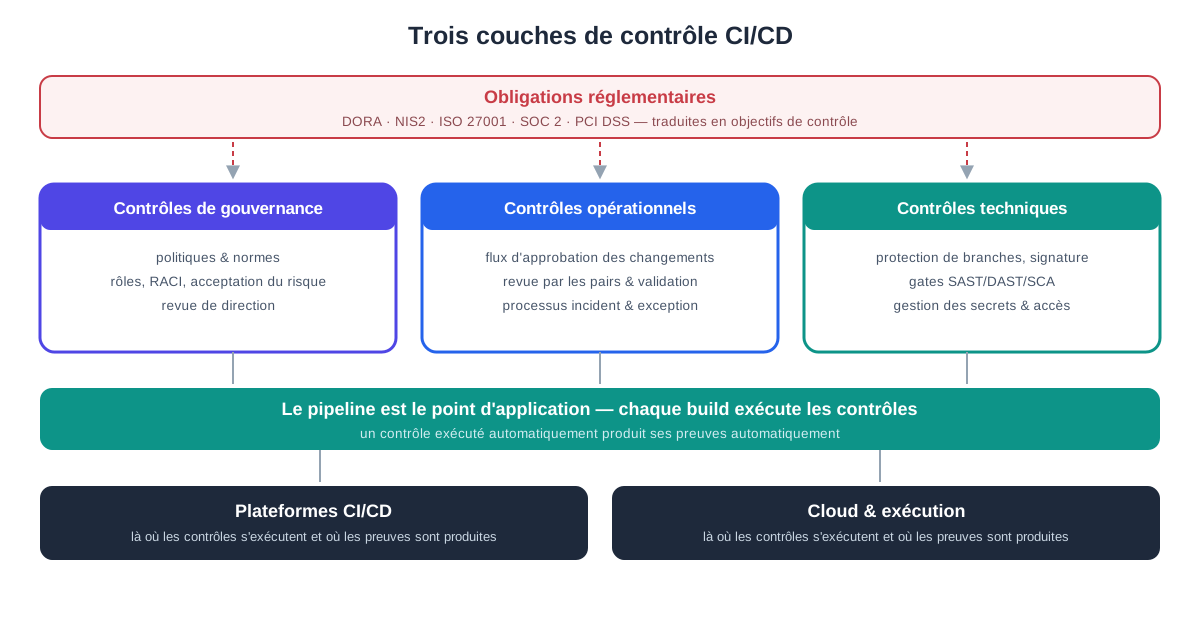
L’architecture détermine si :
- Les contrôles de sécurité sont obligatoires ou optionnels
- Les politiques sont documentées ou appliquées
- Les preuves sont manuelles ou générées par le système
- La conformité est réactive ou continue
C’est l’enseignement fondamental pour les auditeurs : c’est dans l’architecture que la conformité devient une réalité technique. Un pipeline bien conçu rend la non-conformité structurellement difficile. Un pipeline mal conçu la rend structurellement inévitable.
Nouveau dans ces concepts ? Consultez notre Glossaire pour des définitions en langage clair des termes CI/CD.
Pourquoi l’architecture passe en premier
Avant de parler d’outils, de cadres ou d’audits, un principe doit être clair :
Si votre architecture n’applique pas les contrôles, aucune liste de vérification ne vous sauvera.
Une architecture CI/CD sécurisée :
- Empêche les changements non approuvés en production — via le RBAC obligatoire et les points d’approbation
- Bloque automatiquement les violations de politique — via l’application du policy-as-code
- Génère des journaux traçables — pour chaque exécution de pipeline, approbation et déploiement
- Préserve les preuves pour les régulateurs — avec des enregistrements immuables et horodatés
- Soutient les exigences de sortie et de résilience — essentielles pour DORA et NIS2
Les contrôles doivent être intégrés dans le système — pas superposés.
Ce que les auditeurs doivent évaluer dans l’architecture CI/CD
Lors de l’examen de l’architecture CI/CD, les auditeurs doivent évaluer cinq questions clés :
| Question | Ce à quoi ressemble une bonne pratique | Signal d’alerte |
|---|---|---|
| Les étapes de sécurité peuvent-elles être ignorées ? | Toutes les étapes obligatoires ; aucun contournement sans exception gouvernée | Les étapes peuvent être commentées ou désactivées par les développeurs |
| Qui peut déployer en production ? | Déploiement restreint à des rôles spécifiques ; différent des auteurs du code | Toute personne ayant accès au dépôt peut déclencher un déploiement en production |
| Les configurations de pipeline sont-elles protégées ? | Définitions de pipeline dans le contrôle de version avec approbation des changements | Configurations de pipeline modifiables sans revue ni piste d’audit |
| Les preuves sont-elles générées par le système ? | Journaux, résultats de scan, enregistrements d’approbation produits automatiquement | Preuves compilées manuellement avant les audits |
| Les exceptions sont-elles traçables ? | Chaque contournement a une approbation documentée, une raison et une expiration | Aucun processus de gestion des exceptions ; suppressions non gouvernées |
Pour une approche d’évaluation complète, consultez Comment les auditeurs examinent réellement les pipelines CI/CD.
Domaines architecturaux fondamentaux
Les architectures CI/CD réglementées modernes reposent sur quatre domaines fondamentaux. Chaque domaine répond à un objectif de contrôle distinct que les auditeurs vérifient indépendamment.
1. Couche d’application
La couche d’application est le moteur de contrôle du pipeline. Elle détermine si la sécurité est consultative ou obligatoire.
Elle garantit :
- Des workflows d’approbation obligatoires — aucun déploiement sans revue autorisée
- Des points de contrôle de politique bloquants — les constats SAST/DAST/SCA critiques empêchent la mise en production
- Une construction sécurisée et une validation des artefacts — signés, vérifiés, traçables
- Des autorisations de déploiement basées sur les rôles — séparation des tâches appliquée dès la conception
- Une gouvernance des exceptions avec pistes d’audit — chaque contournement documenté et limité dans le temps
Sans application, le CI/CD devient consultatif. Avec application, le CI/CD devient réglementé.
Point d’attention pour l’auditeur : Demandez à voir un déploiement récent qui a été bloqué par un point de contrôle de politique. Si l’organisation ne peut en produire aucun, l’application n’est peut-être pas réelle.
Analyses approfondies :
- Couche d’application CI/CD
- Modèles d’application basés sur le CI/CD
- Contrôles de sécurité CI/CD essentiels
2. Intégration d’un SDLC sécurisé
L’architecture doit intégrer la sécurité de la planification à l’exécution — le principe du shift-left intégré dans la conception du pipeline.
| Phase du SDLC | Contrôle de sécurité | Preuve produite |
|---|---|---|
| Planification | Modélisation des menaces, exigences de sécurité | Documents de modélisation des menaces, user stories de sécurité |
| Code | SAST, analyse des secrets, revue de code | Journaux d’analyse, enregistrements d’approbation de revue |
| Construction | SCA, génération de SBOM, signature des artefacts | Rapports de dépendances, fichiers SBOM, signatures |
| Test | DAST, tests d’intrusion | Rapports DAST, preuves de test |
| Mise en production | Évaluation des points de contrôle de politique, workflows d’approbation | Journaux de réussite/échec des points de contrôle, enregistrements d’approbation |
| Déploiement | Validation de la configuration, parité des environnements | Journaux de déploiement, sommes de contrôle de configuration |
| Surveillance | Protection à l’exécution, détection d’incidents | Journaux d’alerte, enregistrements d’incidents |
Un SDLC sécurisé n’est pas un slogan de conformité — c’est un modèle architectural.
Analyses approfondies :
- Fondamentaux d’un SDLC sécurisé
- Le SDLC sécurisé du point de vue de l’auditeur
- Comment les auditeurs évaluent les contrôles de sécurité applicative
3. Modèle de conformité continue
Les environnements réglementés exigent une conformité continue, et non périodique. L’architecture doit produire des preuves automatiquement à chaque exécution de pipeline.
- Exécution reproductible des contrôles — les mêmes contrôles, à chaque fois, pour chaque pipeline
- Preuves dès la conception — journaux, rapports et enregistrements d’approbation générés comme sous-produit des opérations normales
- Traçabilité automatisée — chaque déploiement traçable jusqu’à un commit, une revue, une analyse et une approbation précis
- Cartographie des cadres — contrôles cartographiés sur DORA, NIS2, ISO 27001, SOC 2, PCI DSS
Une architecture mature produit la conformité en continu — pas trimestriellement.
Analyses approfondies :
- Conformité continue via CI/CD
- Audit continu vs audits ponctuels
- L’architecture de double conformité expliquée
- Construire un référentiel de preuves pour la conformité continue
4. Séparation des domaines de sécurité
Une confusion apparaît souvent entre des domaines de sécurité qui se chevauchent. Une architecture claire évite les doublons et les lacunes de contrôle.
| Domaine | Objet | Préoccupation clé pour les auditeurs | Page de référence |
|---|---|---|---|
| Gouvernance CI/CD | Contrôles de pipeline, application, accès | Les contrôles sont-ils obligatoires et incontournables ? | Explorer |
| Sécurité applicative | Contrôles au niveau du code (SAST, DAST, SCA) | Les tests de sécurité sont-ils intégrés et appliqués ? | Explorer |
| DevSecOps | Modèles opérationnels, rôles, gouvernance | Qui est responsable de la sécurité ? Comment les décisions sont-elles remontées ? | Explorer |
| Cadres réglementaires | Cartographie de conformité et assurance | Les contrôles satisfont-ils aux exigences réglementaires ? | Explorer |
| Audit et preuves | Validation des preuves, évaluation | Les preuves sont-elles fiables, complètes et conservées ? | Explorer |
Comprendre ces domaines évite les doublons et les lacunes de contrôle. L’architecture garantit que chaque domaine a des frontières et des responsabilités claires.
Analyse approfondie : Les domaines de sécurité expliqués
Modèle de maturité architecturale
Les systèmes CI/CD réglementés évoluent généralement à travers quatre stades. Les auditeurs peuvent utiliser ce modèle pour évaluer rapidement le niveau de maturité d’une organisation.
| Niveau | Nom | Caractéristiques | Préparation réglementaire |
|---|---|---|---|
| 1 | Automatisation | Les pipelines automatisent les constructions et les déploiements. Les contrôles sont optionnels. Aucune génération de preuves. | Non prêt pour l’audit. Lacunes importantes dans tous les cadres. |
| 2 | Intégration de la sécurité | Outils de sécurité intégrés (SAST/DAST/SCA). Résultats consultatifs, non bloquants. Journalisation partielle. | Partiellement conforme. Des preuves existent mais l’application est inégale. |
| 3 | Contrôles imposés | Les contrôles critiques bloquent les mises en production non conformes. Séparation des tâches. Preuves systématiques. | Prêt pour l’audit pour la plupart des cadres. Répond aux minimums DORA/NIS2/ISO 27001. |
| 4 | Système réglementé | Traçabilité complète. Politique en tant que code. Conformité continue. Préparation à la sortie. Risque prédictif. | Dépasse les exigences. Modèle d’assurance continue. |
Les environnements réglementés doivent opérer au niveau 3 ou plus. La plupart des cadres réglementaires (DORA, NIS2, ISO 27001) exigent de fait le niveau 3 comme minimum pour la certification ou la conformité.
Pour un outil d’auto-évaluation structuré, voir le cadre d’évaluation de la maturité DevSecOps.
Architecture vs outillage
Les outils ne créent pas l’architecture. L’architecture définit la manière dont les outils sont gouvernés.
| L’architecture décide | Les outils mettent en œuvre |
|---|---|
| Quels contrôles sont obligatoires | Comment les analyses sont exécutées |
| Où l’application intervient dans le pipeline | Quelles vulnérabilités sont détectées |
| Quels échecs bloquent les mises en production | Comment les résultats sont rapportés |
| Comment les preuves sont conservées et protégées | Où les journaux sont stockés |
| Qui peut déroger aux politiques | Comment les exceptions sont traitées techniquement |
Une architecture solide peut changer d’outils sans perdre le contrôle. Une architecture faible dépend entièrement des paramètres par défaut des fournisseurs.
Pour des orientations d’audit sur la gouvernance des outils, voir Outillage de sécurité CI/CD — guide de l’auditeur sur les catégories d’outils et les contrôles.
Architecture et alignement réglementaire
Une architecture CI/CD bien conçue prend en charge plusieurs cadres réglementaires simultanément. Plutôt que d’adapter l’architecture à chaque réglementation, concevez l’architecture une fois — cartographiez les contrôles de multiples fois.
| Cadre | Exigence architecturale | Principaux articles/contrôles | Analyse approfondie |
|---|---|---|---|
| DORA | Gestion des risques TIC, contrôle des tiers, tests de résilience | Art. 9, 21, 28 | Analyse approfondie de l’art. 21 |
| NIS2 | Sécurité de la chaîne d’approvisionnement, préparation aux incidents, gestion des risques | Art. 21 | Cartographie des contrôles de l’art. 21 |
| ISO 27001 | Gestion des changements, contrôle d’accès, développement sécurisé | A.8.25, A.8.28, A.8.29 | Cartographie de l’annexe A |
| SOC 2 | Accès logique, exploitation des systèmes, gestion des changements | CC6, CC7, CC8 | Cartographie des TSC |
| PCI DSS | Développement sécurisé, contrôle d’accès, journalisation, tests | Req. 6, 7, 8, 10, 11 | Analyse approfondie de l’exigence 6 |
Pour une analyse inter-cadres, voir la matrice de recouvrement des contrôles ISO 27001 vs DORA vs NIS2.
Analyses approfondies d’architecture connexes
- Architecture CI/CD seule — pipeline, preuves et approbations
- Couche d’application CI/CD
- Modèles d’application basés sur le CI/CD
- Conformité continue via CI/CD
- Fondamentaux d’un SDLC sécurisé
- Contrôles de sécurité CI/CD essentiels
- Architecture de conformité DORA — le CI/CD comme système TIC réglementé
- L’architecture de sécurité NIS2 expliquée
Principe final
Dans les environnements réglementés, la vitesse de livraison et le contrôle ne s’opposent pas. La bonne architecture les rend compatibles.
Si votre pipeline n’est pas conçu comme un système de contrôle, la conformité sera toujours réactive. Si votre architecture applique les politiques dès la conception, la conformité devient continue.
Ressources connexes pour les auditeurs
- Glossaire — définitions en langage clair des termes techniques
- Comment les auditeurs examinent réellement les pipelines CI/CD
- Constats d’audit fréquents — les 10 principales défaillances CI/CD
- Cadre d’évaluation de la maturité DevSecOps
Nouveau dans l’audit CI/CD ? Commencez par notre Guide de l’auditeur.


